
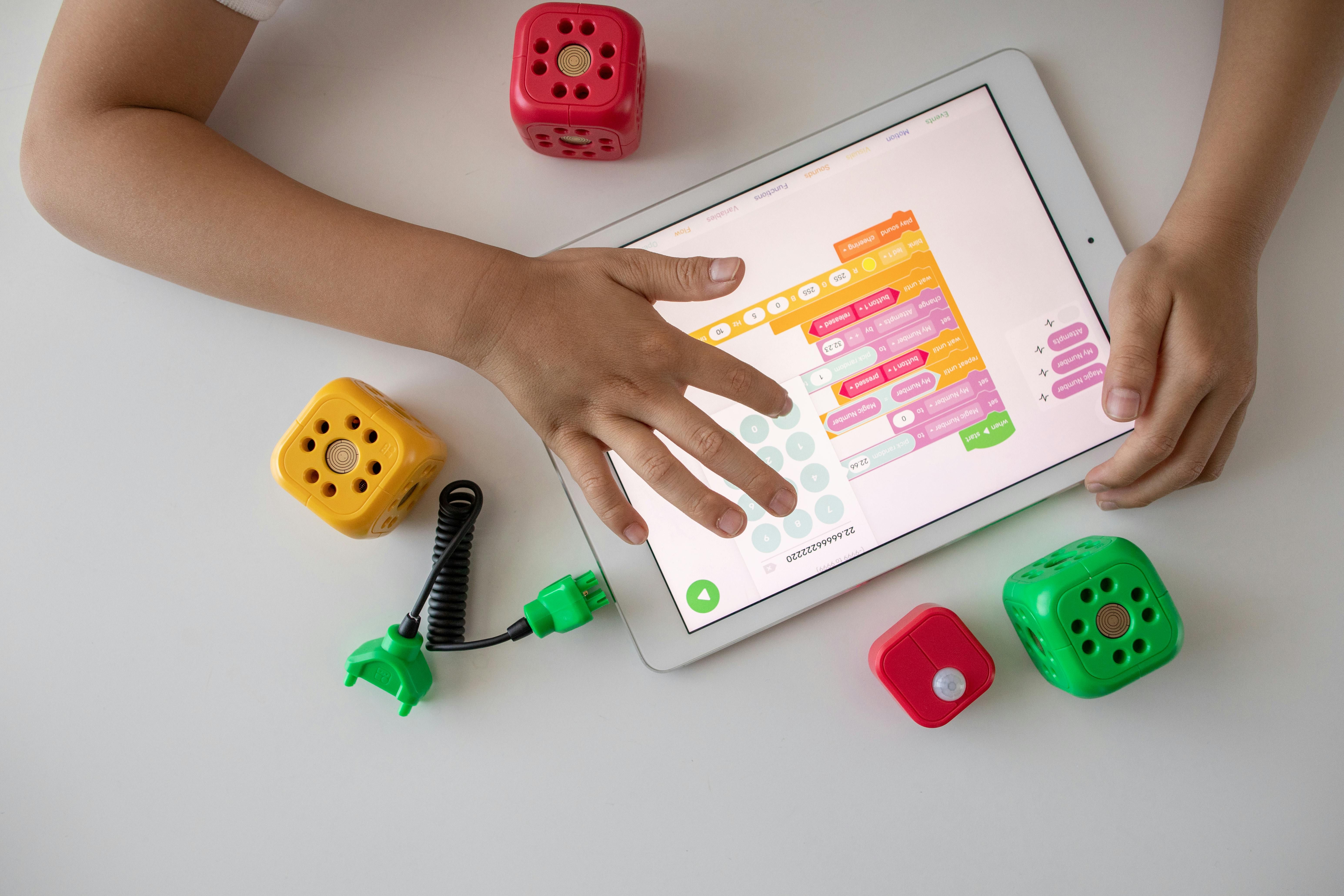
As AI tools get better at writing code, it may seem less urgent for children to learn coding. After all, if a child can type a prompt and get a game or animation generated for them, why spend time learning how code works?
The issue is that AI can produce an output without giving the child a real understanding of the system behind it. They may get something impressive on screen, but still not know why it works, where it breaks, or what to do when the result is wrong.
That is why coding and robotics still matter. Coding teaches children how to give precise instructions and check whether their thinking holds. Robotics makes this even more concrete, because the code has to control something in the real world. When a robot does not behave as expected, the child has to trace the problem and make a better decision.
In an AI-driven world, the stronger learner is not the one who accepts whatever the machine produces. It is the one who can question the output and improve it.
Here are some coding, robotics, and AI programmes in Singapore that help children build that foundation!
In this article
The Lab
What are 3 things parents should know about your school?
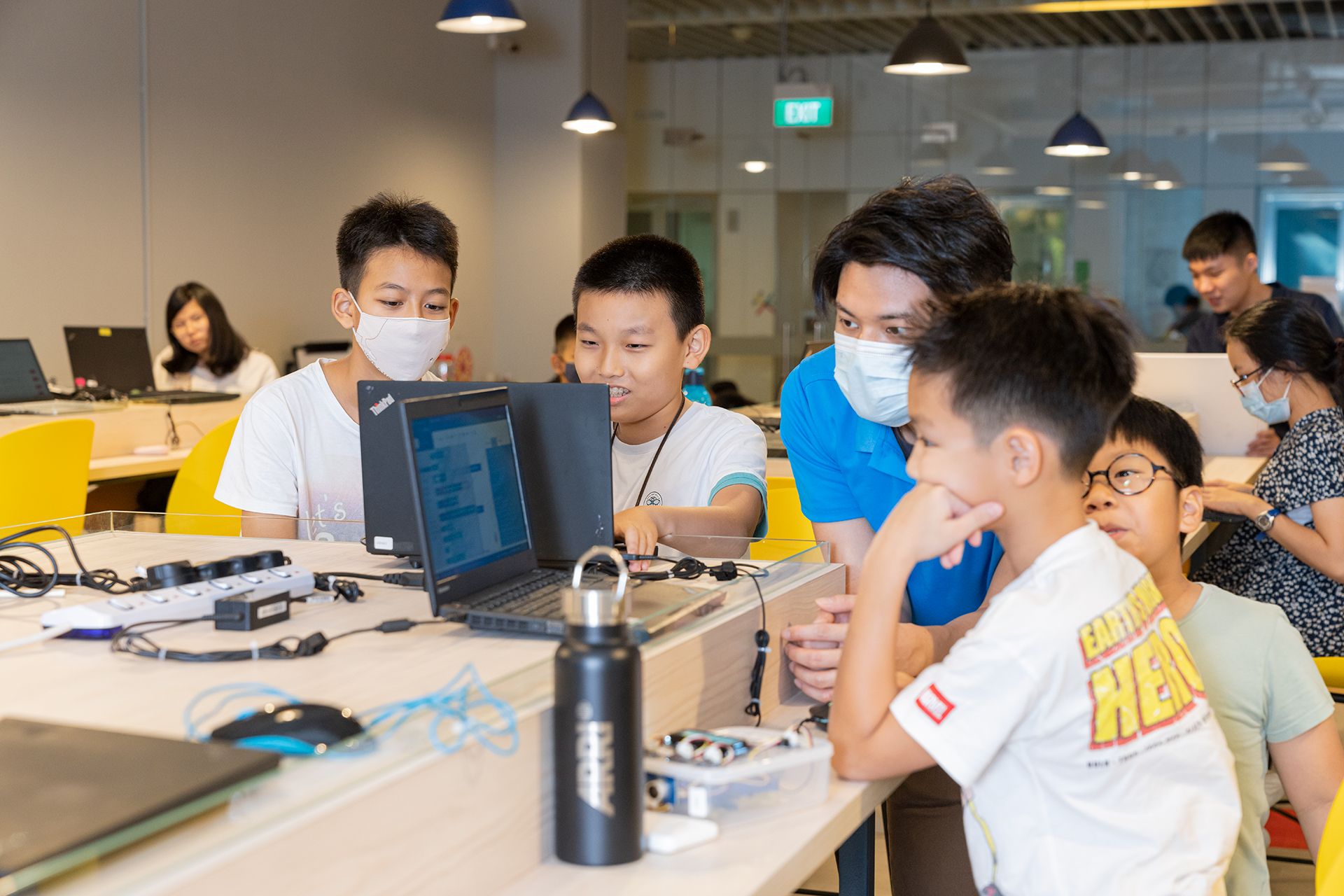
Award-Winning, Hands-On Coding & AI Curriculum: The Lab offers a structured, progressive programme for children aged 5–16+, combining coding, robotics and AI learning.
Students actively create projects using tools like Raspberry Pi, LEGO Spike, and proprietary block-based software, building real skills while developing creativity, problem-solving, and computational thinking.
Our approach has earned us recognition as an award-winning school and multiple competition champions.
Guaranteed Opportunities & Competitions: Every student is given the chance to participate in prestigious national and global competitions like Robocup and NRC (National Robotics Competition) AI Maker. They gain valuable exposure, confidence, and a platform to showcase their skills.
Growth-Focused Learning Environment: Beyond coding, The Lab nurtures a growth mindset, teamwork, and resilience, preparing students for academic success and real-world problem-solving.
How do you support children in the DSA?
Portfolio & Skills Development: Our curriculum embeds projects specifically designed to be used in DSA portfolio building.
Children work on coding, robotics, and AI projects that showcase creativity, problem-solving, and technical skills. Additionally, we give students guaranteed slots in prestigious competitions, helping them strengthen their portfolio and stand out in DSA applications.
Targeted Programmes & Mentoring: Our structured programmes help children excel in areas relevant to DSA, such as computational thinking, problem-solving, and innovative project work. Teachers mentor students individually to maximise their potential and highlight their strengths.
Mock Interviews & Application Guidance: We prepare children for DSA interviews and assessments by running mock sessions and coaching them on effective presentation, communication, and showcasing their projects confidently.
Showcasing Achievements: The Lab ensures students’ achievements, awards, and competition participation are well-documented and presented, giving them an edge in the highly competitive DSA process.
Growth & Confidence Building: Beyond technical skills, we focus on helping children develop self-confidence, resilience, and a growth mindset. These are qualities that DSA selection panels look for.
What does your school do differently from other coding or robotics schools?
Unlike traditional coding or robotics schools that follow rigid classroom-based lessons, our focus has always been on the learning and growth of each child.
We understand that every child is unique, so we craft customised learning journeys tailored to their interests, pace, and strengths. Our classes are kept small to ensure individual attention, creativity, and skill-building. We are consistently ahead of the curve, integrating the latest technologies and teaching methods to ensure our students are prepared for the future.
Why do you think coding is still important in the age of AI?
Even with AI becoming increasingly powerful, coding is still a fundamental skill that teaches children how to think logically, solve problems, and break complex tasks into manageable steps. Learning to code is about understanding how technology works, making informed decisions, and creating tools rather than just using them.
By learning coding, children gain the ability to control and customise AI, design innovative solutions, and adapt to new technologies. This ensures that children are not passive users of technology but active creators and innovators prepared for the future.
Coding Lab
What are 3 things parents should know about your school?
Founded by an MIT alumnus, our award-winning curriculum ensures that screen time is always a productive investment. We transform students from passive consumers of technology into active creators by instilling the computational thinking skills necessary for high-level problem solving. Every project is designed with academic rigour, ensuring it aligns perfectly with a student’s long-term goals for the Direct School Admission (DSA) exercise.
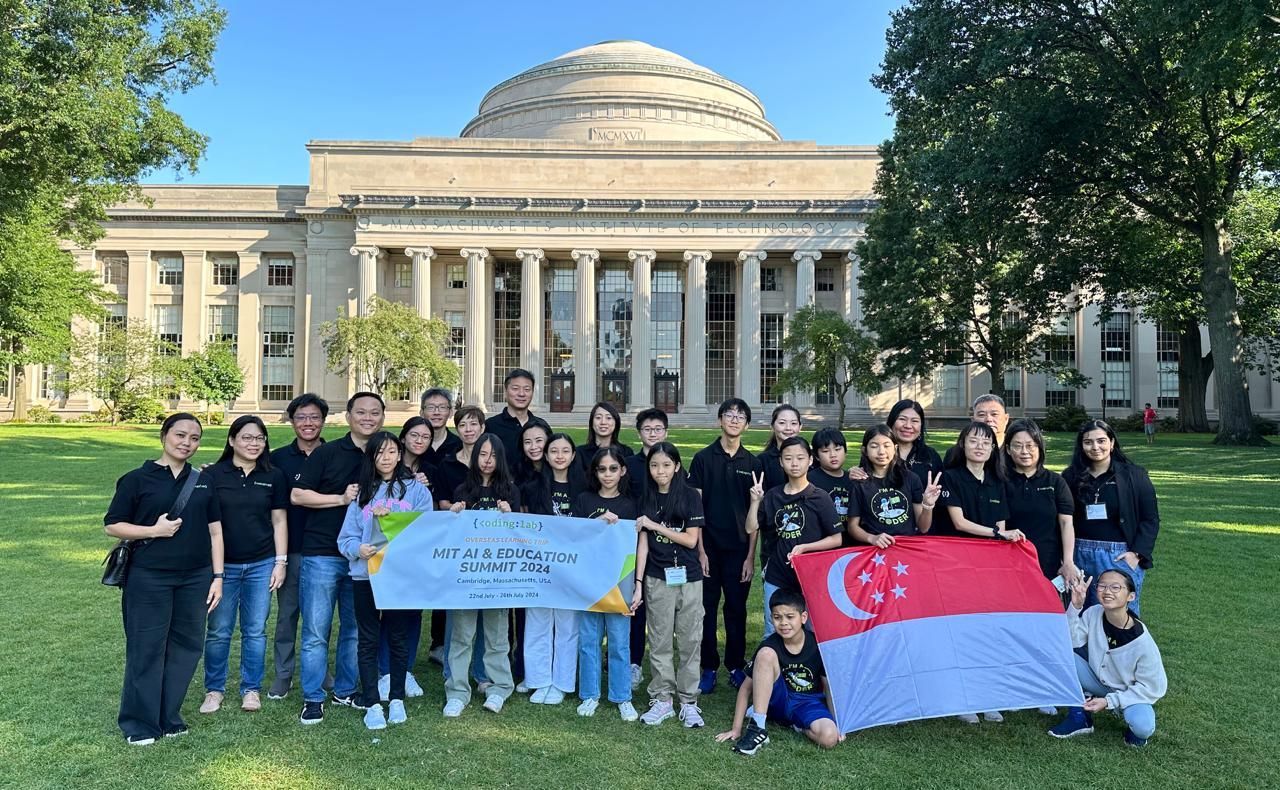
We do not just teach; we produce champions. Our students consistently secure top honours at both local and international levels, including multiple Platinum and Gold awards at the Hwa Chong Info-communications Challenge (HCIC). Our students have also achieved global recognition, clinching first place at the Microsoft Minecraft Cup in Japan and the MIT AI+ Edu Summit.
This excellence is reflected in our track record of alumni gaining admission to elite institutions such as Hwa Chong Institution, Raffles Girls' School, Methodist Girls' School, SJI, NUS High, SST, and more.
Success is a collaborative effort between the student, parent, and teacher. We provide frequent, insightful feedback to ensure parents are fully informed of their child's progress. For those on the DSA track, we offer intensive, highly personalised mentorship. We support families through every stage of the journey, from strategic school selection to the final submission of the application form, ensuring every student is stretched to perform at their absolute best when it matters most.
How do you support children in the DSA?
At Coding Lab, we view the Direct School Admission journey as a strategic marathon rather than a sprint. Our support is anchored by a bespoke roadmap that is personalised based on each student’s unique starting point. We work closely with families to identify the most impactful milestones and achievements, ensuring that every student builds a profile that authentically reflects their technical growth and individual strengths within the digital landscape.
We also place a heavy emphasis on the development of an original portfolio. We guide our students to create independent projects that demonstrate a high degree of technical sophistication and creative application. This ensures that when they present their work to admission panels, they are showcasing a unique ability to use technology as a tool for innovation, rather than just repeating classroom exercises. By focusing on the quality and originality of their work, we help our students stand out as true problem solvers.
Finally, we prepare our students to communicate their ideas with clarity and confidence. The admission process often requires students to explain their thought processes and defend their logic in a high-pressure environment. We mentor our students to develop their technical eloquence, helping them to articulate complex ideas in a way that is both impressive and accessible. This holistic approach ensures that our students are not only capable coders but also well-rounded candidates who can stand their ground in any academic setting.
What does your school do differently from other coding or robotics schools?
While many centres focus on “platform jumping” by moving children quickly between various languages, Coding Lab prioritises depth over variety. We believe true mastery occurs when students stay with a platform long enough to solve complex, multi-layered problems.
For example, our students do not simply finish a course in App Inventor; they use it to build sophisticated mobile applications that solve community issues. Similarly, when they transition to Python, we treat it as a rigorous tool for scientific computing rather than just a hobby. This interdisciplinary approach allows them to apply logic to areas such as Advanced Mathematics and Physics, ensuring they are not just typing code but are learning to engineer intelligent solutions.
Furthermore, we bridge the gap between classroom exercises and professional reality. In 2026, we have moved beyond basic coding to integrate Machine Learning and AI into our core curriculum for primary school students. By working with authentic case scenarios like helping the environment, our students understand how to apply the skills they learn into real-world contexts with nuance. They learn to train models and account for algorithmic bias, ensuring their portfolios carry significant weight in the competitive DSA landscape.
This academic rigour is supported by our strict 1:8 teacher-to-student ratio. This allows our instructors to provide personalised guidance, ensuring that DSA students are constantly challenged by complex extension tasks. At Coding Lab, we do not just teach children how to follow instructions; we mentor them to become the architects of the technology that others merely consume.
Why do you think coding is still important in the age of AI?
In the era of Artificial Intelligence, coding has evolved from writing lines into high-level logical architecture. A helpful way to view this shift is through the lens of mathematics. Even though we have powerful calculators that solve equations instantly, the importance of learning mathematics has not diminished. If anything, it is more vital. A student who understands the underlying logic is the only one who can identify when a calculator is given the wrong input. Coding provides this same framework, allowing a person to oversee AI tools rather than being led by them.
One of the most critical reasons to master coding today is the ability to identify hallucinations. AI tools frequently produce logic that sounds plausible but is fundamentally flawed. Without a firm grasp of coding fundamentals, a user cannot debug these errors. This is similar to music theory. While anyone can press a button on a synthesiser to produce a sound, it is the person who understands composition who can craft a masterpiece. Coding gives students the vocabulary to command AI with absolute precision.
Ultimately, we want our children to move from being passive consumers to architects of the future. Understanding code allows a student to move up the value chain, transitioning from a tool user to a tool builder. Coding is the fundamental literacy of the 21st century. We would never suggest a child stop learning to write simply because word processors exist. Mastering code ensures our children remain the masters of the technology they use.
STEAM Engine by Duck Learning
What are 3 things parents should know about your school?
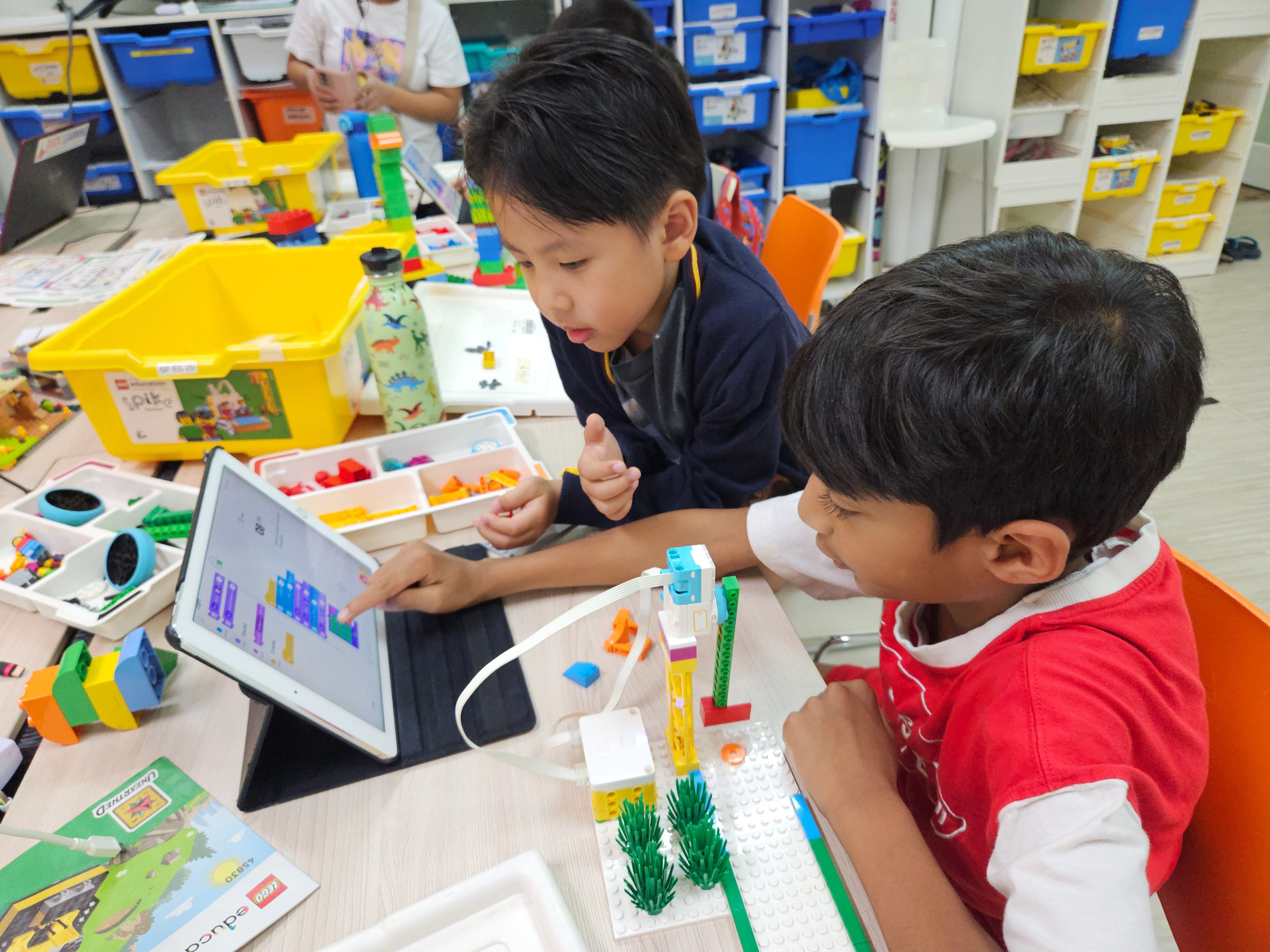
The Gold Standard: Singapore’s Official LEGO Education Partner: We are the exclusive LEGO Education distributors and partners in Singapore. Our trainers are certified by the LEGO Education Academy in Denmark, ensuring your child receives the exact same high-calibre instruction we provide to the majority of Singapore’s mainstream schools. When you learn with STEAM Engine, you are getting the most authentic, world-class robotics experience available in the country.
“Competition-Ready” from Day One: Many centres require months of “theory” before students can compete. We believe the best way to learn is by doing. Our programmes are tailored to all skill levels, integrating competition prep directly into the learning journey. By tackling real-world challenges immediately, students develop 21st-century competencies, such as critical thinking and adaptive problem-solving, in a high-energy, practical environment.
Building Skills That Outlast the Robots: While we love robotics, we are ultimately in the business of building successful humans. Our “all-rounded” approach focuses on the essential soft skills that will serve your child for life: communication, leadership, and collaboration. We use STEAM as the vehicle to teach resilience and teamwork, ensuring that the confidence they gain at our center follows them into their future careers and personal lives.
How do you support children in the DSA?
Expertise at the Source: We are the only LEGO Education distributors in Singapore, and our parent company, Duck Learning, co-organises the National Robotics Competition (NRC) and the FIRST LEGO League (FLL). These are the two largest and most prestigious robotics platforms in the country. Because we help set the stage for these national events, our students learn with the exact equipment, standards, and expertise that define the competitive landscape.
A Strategic Partner for DSA Success: We provide comprehensive mentorship for the Direct School Admission (DSA) exercise. Beyond technical skills, we guide students in building a “healthy” portfolio that tells a story of growth. We also conduct specialised interview coaching, helping students articulate their technical logic and passion clearly to school panels. We ensure their portfolio isn't just a list of classes, but a professional reflection of their journey.
Character Over Trophies: While we win awards, we believe a successful DSA application — and a successful life — is built on character and soft skills. Schools aren't looking for programmers; they are looking for leaders, collaborators, and resilient thinkers. Our curriculum focuses on 21st-century competencies: how a student handles a robot “glitch” in public, how they communicate with teammates, and how they apply their knowledge to real-world problems.
What does your school do differently from other coding or robotics schools?
While many centers teach coding as a screen-based hobby, STEAM Engine offers a professional-grade ecosystem that bridges the gap between a classroom and the national stage.
We are the Source, Not Just the User: Most centres buy their sets from us. As the exclusive LEGO Education partner in Singapore, we don't just “teach” the curriculum. Instead, we help shape how robotics is taught nationwide. Our trainers are certified by the LEGO Education Academy in Denmark, meaning your child learns from the same experts who train the teachers in Singapore’s top Ministry of Education schools.
The “Duck Learning” Pedigree: Our parent company, Duck Learning, co-organises the National Robotics Competition (NRC) and the FIRST LEGO League (FLL). This gives our students a unique vantage point. We understand the high standards of these national competitions because we are the ones helping to bring them to life.
Holistic DSA Mentorship: We view the Direct School Admission (DSA) process as a marathon, not a sprint. While others focus purely on winning trophies, we focus on portfolio storytelling. We mentor students on their character, communication, and soft skills, helping them excel in high-pressure interviews where they must explain their logic, teamwork, and resilience to school panels.
Applied Learning vs. Rote Coding: We believe in the learning journey. We don't make students wait for years to enter a competition. Instead, we integrate competition-style challenges into daily lessons, ensuring that 21st-century competencies like critical thinking and grit are built into every brick they snap together.
Why do you think coding is still important in the age of AI?
At STEAM Engine, we believe the answer lies in the difference between being a user of technology and an architect of it.
Coding is the “Grammar” of Critical Thinking: AI is a powerful engine, but a driver still needs to understand the mechanics of the road. Coding teaches computational thinking: the ability to break down complex problems into logical, bite-sized steps. Even if an AI tool generates the final code, a student needs the foundational knowledge to debug it, refine it, and ensure it’s doing what it’s supposed to do. You can't direct a tool you don't understand.
From Prompting to Problem Solving: Our robotics-based coding approach teaches students how to give precise instructions to a physical machine. This translates directly to AI literacy. A student who understands coding logic is far better at prompt engineering — the art of communicating effectively with AI to achieve a specific, high-level result.
Maintaining Human Agency: There is a famous saying in tech: “Program, or be programmed.” We want our students to have agency over the digital world. By understanding how algorithms work through LEGO Education's hands-on platforms, students move from passive consumers of AI to creators who can leverage AI to solve real-world challenges.
Robotics Bridges the Digital-Physical Divide: AI lives in a box; robots live in the real world. Coding a robot to navigate a physical obstacle course requires an understanding of physics, sensors, and environmental variables that AI alone can't replicate without human logic. This “Applied AI” is where the future of work lies, and it’s exactly what we teach at STEAM Engine.
LCCL Coding Academy
What are 3 things parents should know about your school?
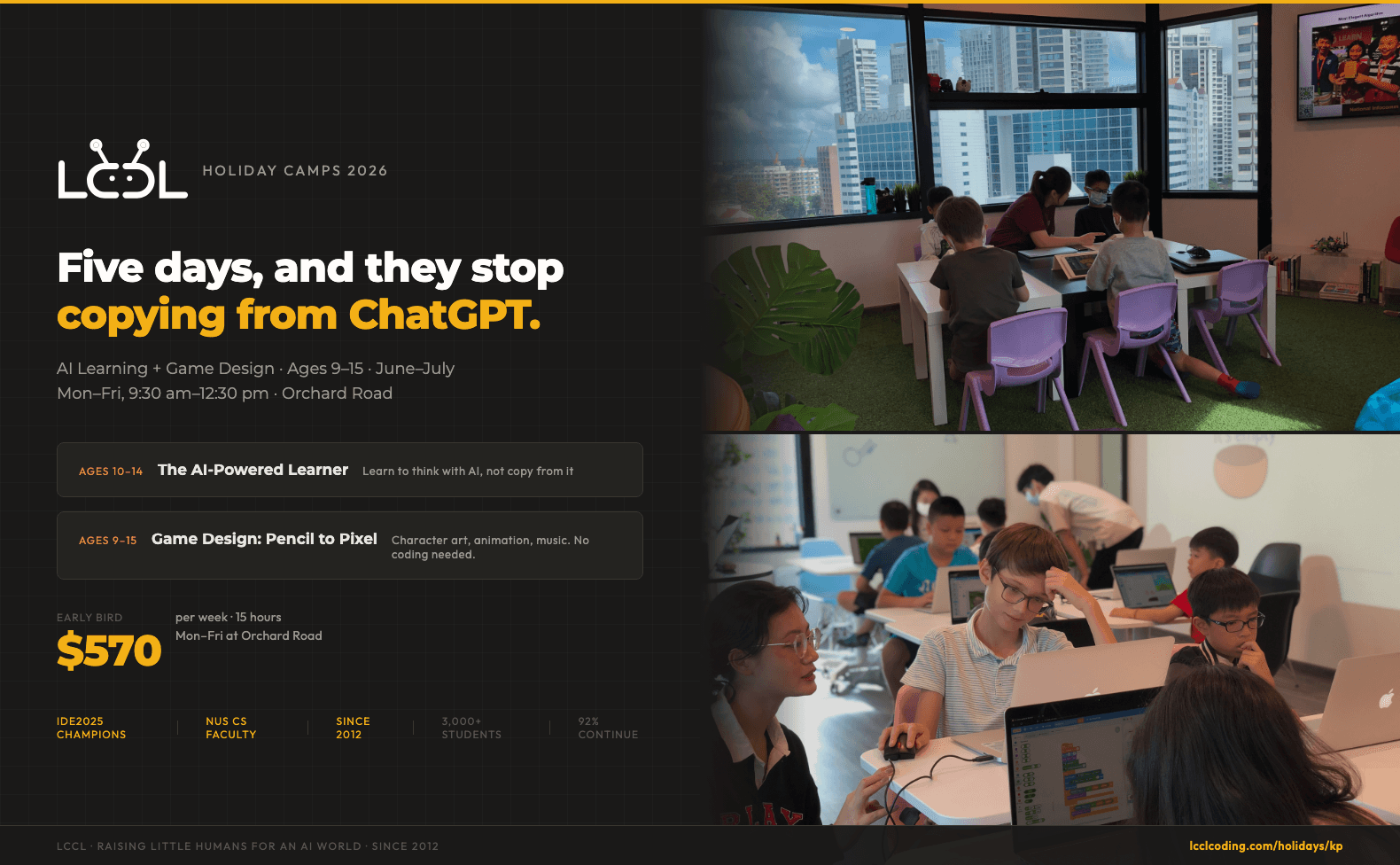
Our mission is raising little humans for an AI world.
Your child is already using AI for homework. Most of them copy what it gives them. We teach kids to catch when it's wrong, so they can actually think for themselves.
We've been doing this since 2012.
14 years, 3,000+ students. Our founder studied Computer Science at NUS. Our curriculum advisor, Prof Leong Hon Wai (Honorary Fellow, NUS), has spent years bringing computational thinking to students, parents, and teachers across Singapore, Malaysia, China, and Thailand. He makes problem-solving rigour accessible to anyone.
We're not a pop-up camp riding the AI wave. We started with coding fundamentals and evolved because the world our students graduate into has changed.
Every child learns at their own pace.
We mentor students at their optimal learning cadence because each child's relationship to learning matters more than a fixed syllabus. 92% of our students continue after their first term. They stay because the work is real, not because of lock-in contracts.
How do you support children in the DSA?
Your child has been coding for two years. Can they explain what they built to someone who wasn't in the room?
For DSA in Computing or Infocomm, that's what matters: a portfolio of work the child actually built and can talk about, not templated exercises. Our students walk into interviews with projects they've built and debugged themselves.
The results back it up: IDE2025 Overall Championship, four Top 20 at Coding Olympics 2025, Hwa Chong Platinum Award recipients 2023–2025. But the real asset isn't the trophies. It's that the child can explain how they solved the problem.
What does your school do differently from other coding or robotics schools?
Most programmes are still teaching the 2020 skill set: write code. We teach the 2026 skill set: think clearly enough to direct AI and catch its mistakes.
Coding is the foundation, not the destination. Our students progress from Scratch through Python, but what matters is the thinking they build along the way. We've built AI literacy into our curriculum because knowing how to code isn't enough when AI can generate code too. Your child needs to recognise when AI is confidently wrong and know what to do about it.
This June to July, we're running a holiday camp that puts this into practice: The AI-Powered Learner (ages 10–14, 5 days) teaches kids how to study and learn with AI. Half the week is offline: pen, paper, self-reflection. $570 for 15 hours of instruction. We're also running Game Design: From Pencil to Pixel (ages 9–15) for kids who learn best through creating.
Why do you think coding is still important in the age of AI?
Coding teaches the thinking that makes AI useful. A child who can break down a problem and debug when things go wrong can do the same whether they're writing Python or directing an AI model. Without that foundation, kids become passive consumers of whatever AI gives them.
But coding alone isn't enough anymore. Kids also need to understand how AI works and when to push back on it. That's the shift we've made at LCCL. We teach both. Coding builds the reasoning. AI literacy teaches them to apply it.
ThinkCode
What are 3 things parents should know about your school?
Real-World, Industry-Relevant Learning: ThinkCode goes beyond basic coding. Our students design and build real AI-powered robots and systems, applying concepts used in today’s industries, AI, automation, and engineering.
Proven Track Record with Schools & Competitions: We develop structured STEM and AI programmes for government and private schools and actively coach students for national competitions. This reflects both credibility and results.
Built by Experts, Not Just Teachers: Our curriculum is created by an experienced STEM development team, led by professionals with engineering and education backgrounds, ensuring every lesson is purposeful, progressive, and impactful.
How do you support children in the DSA?
ThinkCode provides structured portfolio-building and mentorship, aligned with DSA requirements:
Hands-on AI & robotics projects (not just theory)
Guidance in documentation, presentation, and video submissions
Exposure to competitions and real problem-solving challenges
Coaching to articulate their learning confidently
We focus on helping each student stand out with authentic, high-quality work, not generic certificates
What does your school do differently from other coding or robotics schools?
One-to-One Attention: Every child progresses with guidance tailored to their pace and ability.
MOE-Registered Instructors: Trusted, experienced educators with real teaching credentials.
Build, Not Just Learn: Students create working AI robots.
Why do you think coding is still important in the age of AI?
AI does not replace coding; it raises the bar. At ThinkCode, students learn to:
Build, train, and control AI systems
Understand how AI makes decisions
Develop problem-solving and system-thinking skills
In the age of AI, the advantage belongs to those who understand it and not those who depend on it.
Kodecoon Academy
What are 3 things parents should know about your school?
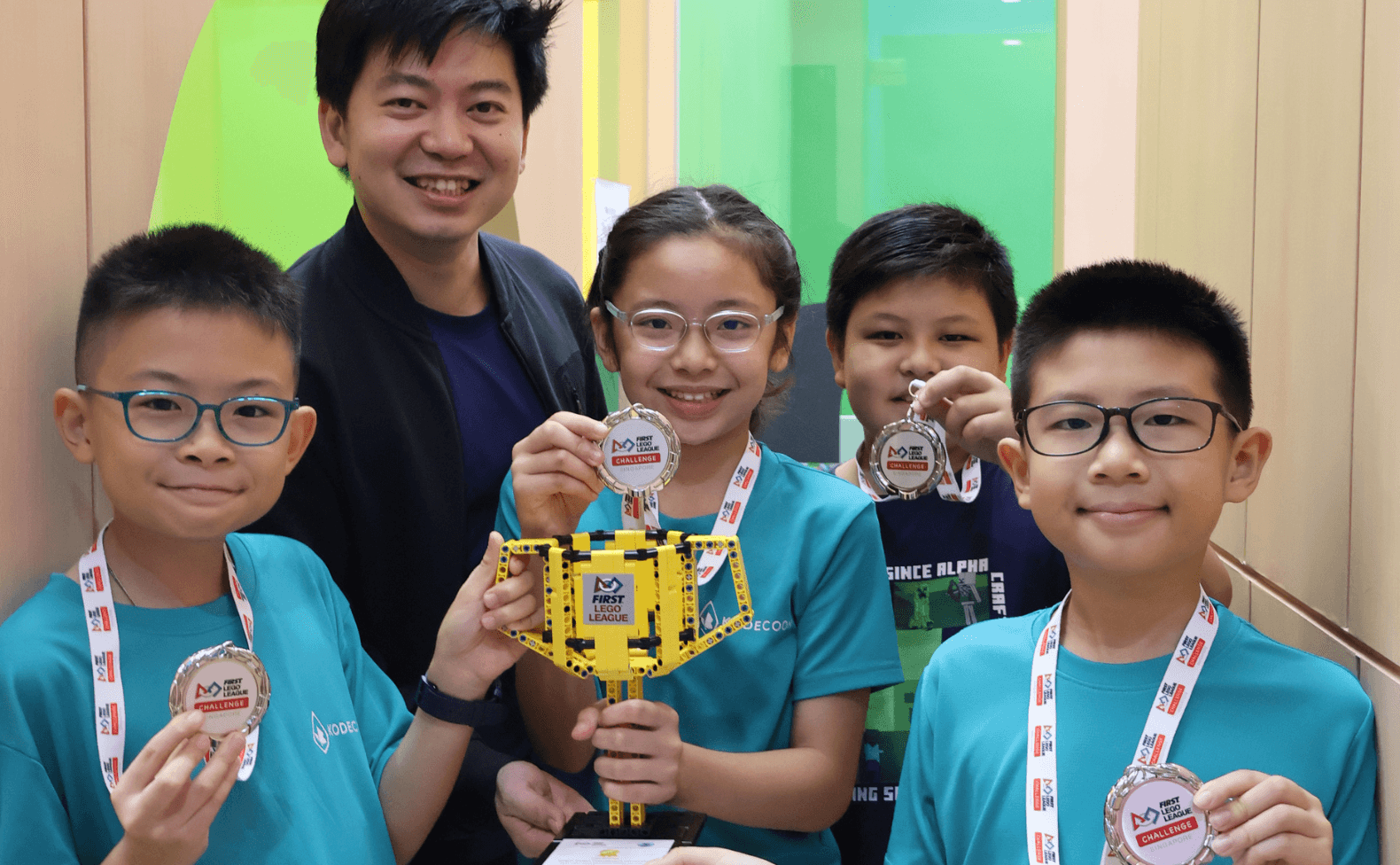
Founded in 2016, Kodecoon has been nurturing young learners for nearly a decade, with seven centres islandwide. We are deeply grateful for the trust and support of our parent community, reflected in over 500 positive 5-star reviews on Google and Facebook over the years.
We create real opportunities beyond the classroom. Kodecoon is not just a coding school. We provide students with opportunities to apply what they learn through real experiences such as internships and Kode Forward, our student-led initiative where students give back to the community by teaching and sharing their knowledge with others.
We adapt to each child’s learning pace. Every child learns differently. Some students are ready to move faster, while others need more time to build confidence. At Kodecoon, we introduce self-directed learning, allowing each student to grow at a pace that suits their ability and learning style.
We help our students excel in EAE and DSA application. We provide competition opportunities, innovation projects, and real-world challenges that help students build meaningful portfolios for DSA and EAE. With a community of seniors who have successfully obtained confirmed offers, our students can learn from real experiences and be inspired by those who have walked the journey before them. At Kodecoon, we strive to help every student stand out because their success is our success too.
How do you support children in the DSA?
Kodecoon supports students in their DSA and EAE journey by helping them build a strong, meaningful, and authentic portfolio through real competition opportunities, innovation projects, and hands-on coding or robotics experiences. We do not believe a portfolio should only be a list of certificates; it should tell the story of a student’s growth, resilience, teamwork, problem-solving, and passion. Through exposure to internal competitions, national-level competitions, hackathons, and innovation challenges, students are given opportunities to apply what they learn, gain confidence, and collect experiences that make their profile stand out.
Beyond portfolio building, we also support students through mock interview preparation, where they learn how to reflect on their journey and speak about their achievements with clarity and sincerity. For our seniors who have successfully received confirmed offers, we invite them back to share their experiences and speak to our juniors. This allows younger students to learn from real examples, understand what preparation looks like, and feel inspired by those who have walked the journey before them.
At Kodecoon, we strive to help every student stand out not just because of what they have built, but because of who they are becoming. Their success is our success too.
What does your school do differently from other coding or robotics schools?
What makes Kodecoon different is that we go beyond teaching coding and robotics as classroom subjects. While many schools may teach similar technical skills, we focus on truly understanding each child and supporting their growth as if they were our own. We encourage students to participate in competitions, showcases, and real-world challenges to help them build confidence, apply their skills, and strengthen their portfolios. This growth is made possible through the dedication of our teachers, who are committed to helping every student develop not just as coders or competitors, but as confident individuals. As one parent shared in a Google review, “I’d recommend Kodecoon to any parent who wants their kids to grow, not just to compete.” Another parent also shared, “They teach robotics, but more importantly, they handled my kid as a person, not just a student.”
These words reflect what we believe makes Kodecoon different. At Kodecoon, we are not just teaching children what they need to know; we are helping them discover what they are capable of becoming. We see each child as more than just a student in a class. We see them as a person with their own strengths, struggles, dreams, and potential. That is why we take responsibility in guiding them with the confidence, resilience, and purpose they need to thrive in the future.
Why do you think coding is still important in the age of AI?
If you were to build a home, would you put the roof first, or would you build a strong foundation first? Learning the fundamentals is even more important in the age of AI because it gives children the foundation they need to use technology wisely. AI can give answers, but children still need logic, creativity, problem-solving, and critical thinking to guide it, question it, and apply it meaningfully. By learning coding, they understand how technology works instead of simply using AI to copy answers. More importantly, starting early builds their confidence to explore, create, and adapt in a future shaped by AI. The future will not only belong to those who have AI, but to those who know how to use it well.
We want to prepare our Kodecoon students beyond the current AI technology. There is more to come and the question is: how can we best prepare our students? We choose to strengthen their fundamental skillsets and mindsets.
This article contains sponsored content.


