PSLE 2025: How to Do Well in Secondary School

Submitted by KiasuEditor
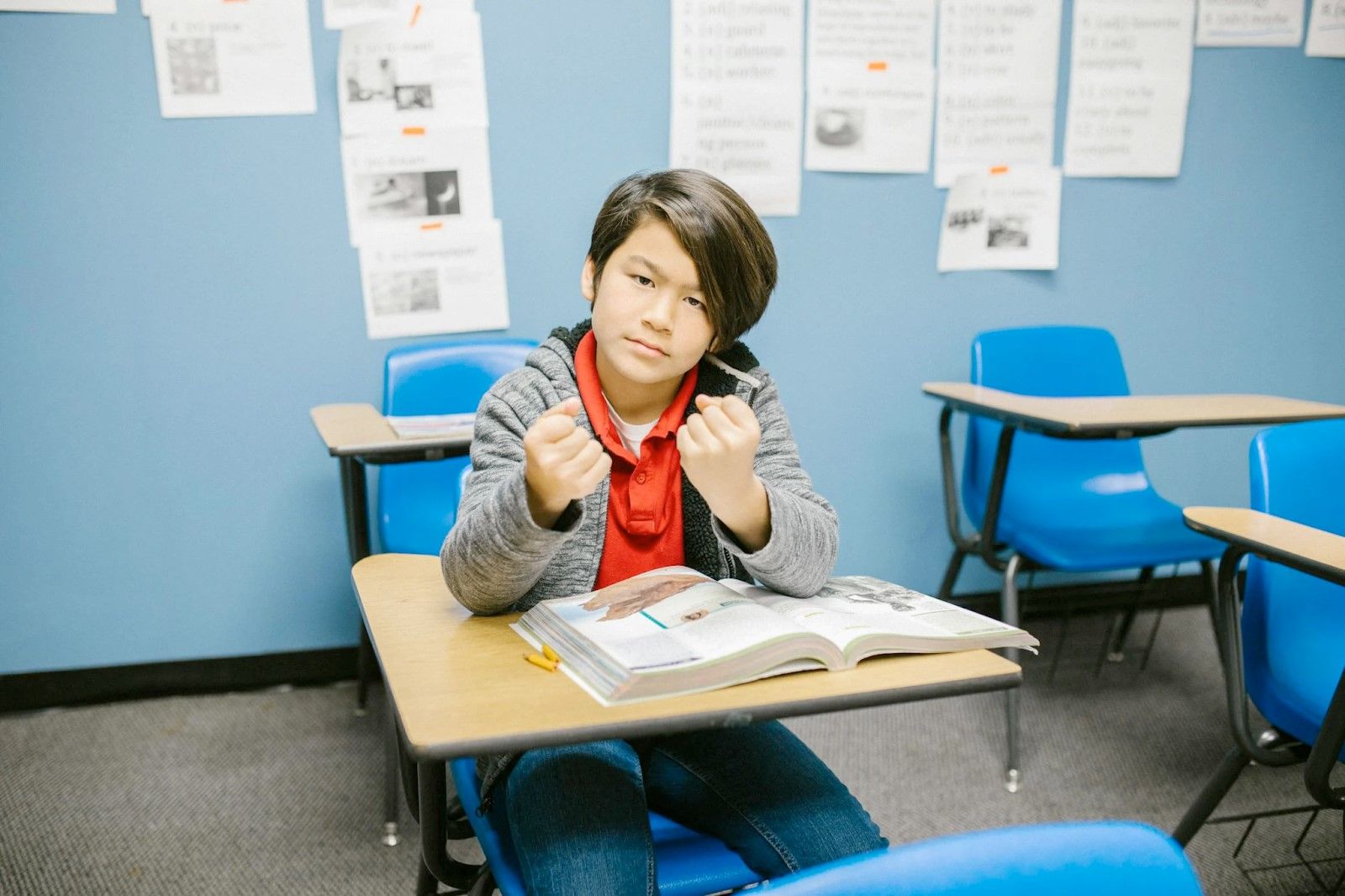
After the PSLE, many parents hope that secondary school will be a fresh start for their children.
Secondary school brings new subjects, new routines, and a big jump in independence. But at the same time, distractions like new friends, social media, and gaming can become harder to manage.
As parents, we want to support our children through this transition. How can we do this well?
Below, we feature tips from “Bright Kids Who Couldn’t Care Less,” written by Harvard psychology professor and learning expert Ellen Braaten. Her insights reveal why some children struggle with motivation and more importantly, what parents can do about it.
Is your teen displaying signs of being unmotivated?
It can be hard to tell what’s a “normal” level of motivation for a teen, and what points to a more worrying lack of motivation. Here are some signs to look out for:
Ages 12 to 13:
- When not on a device, complains about being bored, with no solutions
- Has trouble finding something to do, because nothing seems interesting apart from devices
- Prone to saying “I’m bad at X” or “I can’t do Y”
- Is sensitive to criticism
- Often complains that others are “unfair”
- Doesn’t complete homework
Ages 14 to 18:
- Can’t identify any activities that they are interested in
- Can’t plan for a longer-term goal, such as scoring well for exams, with steps to achieve the goal
- Says things like “I want to go to X university” or “I want to be Y,” but does not take steps to reach that dream
- Social circle consists mainly of other similarly unmotivated friends
- Avoids competitive situations
- Relies on devices, or is prone to risky behaviours
- Is often late for school
Regardless of age, you may also notice these behavioural patterns forming:
- Waits till the last minute to do a task
- Downplays success, saying it’s due to luck rather than skill
- Unwilling to try anything new or difficult
- Asks for help before trying to find a solution
- Gives up quickly
- Low sense of personal responsibility (e.g. needs reminding to pack school bag)
- Gives the impression that they don’t care about anything
- Displays symptoms that may indicate anxiety or depression
How to help your teen find motivation for studying?
Convinced that your teen is suffering from a lack of motivation?
It’s essential to step back and reflect. Is there a situation at home that could have disrupted your teen's sense of wellness and safety? Are they experiencing something in school that you don’t know about, such as bullying? If not, should they be assessed for learning challenges or mental health issues?
Here’s something else to consider: Could there be a mismatch between your expectations and your teen's desires? For instance, you might want your teen to play a sport, and they might have an aptitude for it, but they don’t enjoy playing competitively. Or they may want to do little projects for pure fun, like cooking a meal or creating a craft, with no larger aim. This may disappoint you, but it doesn’t mean that your child is unmotivated.
Another common situation is when a teen has siblings who are doing well academically and excelling at their co-curricular activities (CCAs). Parents do tend to expect all of their children to follow a similar path. There may also be goals that you think are essential, such as going to junior college, but these may not be goals that your teen is interested in.
If you can’t pinpoint any external stumbling blocks for your teen, what’s next?
First, focus on identifying your teen’s strengths. A strength consists of three parts:
- Aptitude (what your teen seems to have a knack for, or the potential ability to do well)
- Practice (what your teen voluntarily spends time doing)
- Pleasure (what makes your teen happy)
As a quick exercise, ask your teen to make three lists:
- Top 10 things they are naturally good at
- Top 10 things they choose to spend time on
- Top 10 things they genuinely enjoy
Next, look for repeats across these lists. If an item appears twice (or all three times), it’s a strong clue to a real interest or emerging passion.
Once you have insights, use them to guide conversations with your teen about school subjects, CCAs, or future study paths. For example, if your teen naturally enjoys solving problems and spotting patterns, they might be suited for subjects like math, coding, or engineering. If they spend hours sketching or making things, you can explore art, design, or technology-related courses. These lists can also help in choosing a secondary school, polytechnic course, or junior college subject combination.
What's the value of this exercise? It shows your teen that their skills and interests have real-world significance. Instead of forcing your teen to be good at everything, focus on developing what they are naturally drawn to. This makes studying feel less like a burden, and more like a stepping stone toward something meaningful.
Apart from identifying your teen's strengths, do also look at their overall well-being. Specifically, check if these key aspects of their life are in balance:
- Screens: The older your teen, the trickier it becomes to limit screen time. Instead of outright bans or power struggles, try structured negotiation — offering choices within set limits. For example, say, “Would you rather have one hour of gaming after homework or 30 minutes before and 30 minutes after?” This gives a sense of control while keeping boundaries clear.
- Schedules: Use the PDF hack to schedule Playtime (unstructured time for your teen), Downtime (restful activities and sleep), and Family Time for each day. If you find it difficult to fit these in, your teen is likely overscheduled.
- Sleep: In general, secondary schoolers need 8 to 10 hours of sleep.
Once these are in place, you can begin talking to your teen about goal setting, which will provide a sense of purpose.
The challenge is ensuring that you’re listening to your teen's goals, rather than trying to push your own agenda. One approach is to ask your teen, “If someone could grant you a wish, what would you wish for?” If their reply is something like “I wish I could feel better,” this is a clue that you should look into their physical or emotional health. But if they say, “I wish I could do better in school,” you can ask, “For that to happen, what do you need to do?” Aim to help them define SMART goals, which are Specific, Measurable, Achievable, Relevant, and Time-Bound.
Once my teen starts secondary school, how can I help them?
Teens who struggle with motivation often need support to get organised.
This means you may need to sit with your teen to make a list of their homework assignments, projects, and exams, along with accompanying deadlines.
If any task seems overwhelming, help your teen to break it down into smaller, more manageable parts. For example, if your teen has a research project, you can help them break it down into these steps: choosing a topic, gathering sources, outlining key points, drafting sections, and reviewing before submission.
Despite having a task list, your teen may still feel uncertain about what to do. Let’s say they’re daunted by having to find sources for a World War II project. Ask what feels difficult — is it knowing where to look, or judging a source’s credibility? Search together and highlight reliable markers like an author’s name, a recent publication date, or a university affiliation. Then encourage them to try on their own, while offering to review their findings if needed. This approach builds both confidence and mastery, which in turn strengthens motivation.
Want to talk to other parents about life in secondary school? Start a conversation on the KiasuParents forum!


