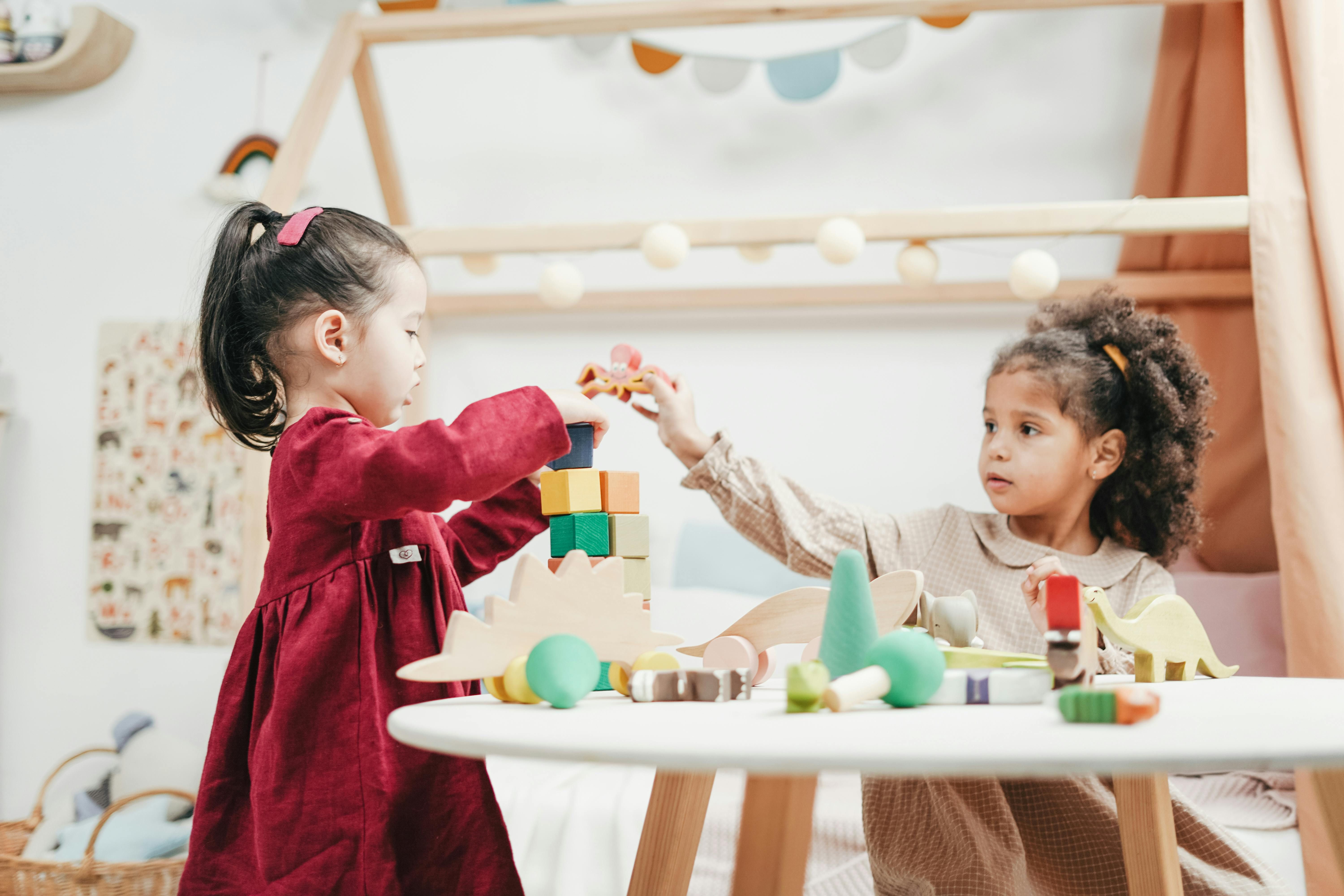
pre-school

Preschools and kindergartens in Singapore

Preschool Guide for Singapore Parents

When do children in Singapore need to enter preschool?

There is no legal requirement in Singapore to send your child to preschool, i.e. preschool is not considered compulsory education. 

However, most families in Singapore prefer an early school start for their children. According to recent figures, the local preschool enrolment rate is 88% for children aged three to four, and 95% for children aged five to six.

Here are some reasons that parents may favour sending their children to preschool, even though it is not compulsory:

1
Some research has shown that children who have attended preschool for at least two to three years have better outcomes for English and to a greater degree, Maths, at age 16. Those who attended preschool also displayed a more positive attitude towards learning, and better self-regulation.
2
For families that are unable to provide learning opportunities for the Mother Tongue Language (MTL), preschools can provide this environment, and build the basic skills for children that are needed for Primary 1.
3
Preschool allows children to adapt to school life, gain independence, and develop their social skills.

On the other hand, if you are considering letting your child skip preschool, it may be for these reasons:

1
You could have financial constraints. If this is the case, do read about the subsidies and financial assistance options for preschool education, which your family might qualify for.
2
You may prefer to teach your child reading and writing skills at home, while letting them have more unstructured playtime before primary school begins. This is valid, but do also consider if your child might find it challenging to adjust to primary school

What are the different preschool programmes in Singapore?

As you start exploring preschools or child care centres, these are some terms that you will encounter:

ProgrammeAge
Infant Care2 months to 18 months old
Playgroup18 months to 2 years old
Pre-Nursery (Nursery 1 or N1)3 years old
Nursery (Nursery 2 or N2)4 years old
Kindergarten 1 (K1)5 years old
Kindergarten 2 (K2)6 years old

You can find more information about Singapore preschool programmes on LifeSG.

What do preschools in Singapore teach?

If you are very concerned about primary school readiness, do look at the preschools that fall under the Ministry of Education’s purview, known as MOE Kindergartens. These are some of their learning outcomes:

English Language

  • Listen for enjoyment and information

  • Speak with confidence to convey meaning

  • Read with enjoyment and understanding

  • Use symbols, letter-like shapes, letters, and words to communicate ideas and information

Mother Tongue Language (MTL)

  • Show interest in learning the MTL

  • Develop foundational language and literacy skills in the MTL

  • Develop awareness of local culture

Numeracy

  • Enjoy learning and using numeracy concepts and skills in daily life

  • Understand relationships and patterns

  • Develop counting skills and number sense

  • Understand basic shapes and spatial concepts

For other types of preschools in Singapore, it’s better that you read their websites and schedule a visit, in order to understand their curriculum and outcomes. These preschools may adopt one or more of the following approaches:

  • Montessori: Child-led learning with hands-on activities

  • Reggio Emilia: Project-based learning emphasising creativity and collaboration

  • Waldorf Steiner: Holistic development through imagination and nature

  • Multiple Intelligences: Activities tailored to diverse cognitive strengths

  • Play-based learning: Learning through structured and free play

  • Inquiry-based learning: Exploration driven by curiosity and questioning

  • Mandarin-focused/Chinese immersion: Language proficiency through bilingual education

Below, we have more answers to common questions about preschool education in Singapore. For more information, do read our articles as well!

FAQ

For parents who intend to send their children to MOE Kindergartens (also known as MK), the monthly fee has been:

  • S$160 for Singapore citizens
  • S$320 for Singapore Permanent Residents

Please check the MOE website for the most current information. 

To help local families offset costs, all Singaporean children are eligible for a basic subsidy of S$150 per month. Depending on your family’s income, you may also be eligible for additional subsidies.

Apart from the above, parents seeking affordable government-endorsed preschools should also look at centres under the Anchor Operator and Partner Operator schemes. Both schemes fall under the purview of the Early Childhood Development Agency (ECDA).

For private preschools, it's best to check directly with them about their fees, which can be in the four-figure range.

Whether your child is a Singapore citizen, permanent resident, or foreigner in Singapore, you can use the LifeSG search tool to shortlist preschools by location, preschool level, and your intended month of enrolment. If you already have a preschool in mind, you can also search by centre name.

Why use the LifeSG search tool? This way, you can be assured that the listed preschools are licensed by Singapore’s Early Childhood Development Agency (ECDA).

In the search results, you will be able to view preschools and their addresses, the monthly fee range, as well as whether there are available vacancies. 

If needed, you can filter the results by:

  • Fee range
  • Vacancies (available or limited spaces)
  • School hours (including full day, half day, and flexi care)
  • Mother tongue language
  • Food served (including halal and vegetarian)
  • Whether school transport is available

These are some factors that parents consider when selecting preschools:

  • Location
  • Fees
  • Class size
  • Curriculum
  • Outcomes (will your child be sufficiently prepared for primary school academics)
  • Environment
  • School culture

Do schedule a school visit for schools that you're interested in, so that you can talk to the educators there. You can also try to speak to parents who have experience with the school. 

It's not possible or realistic to investigate every angle before you commit to a preschool. Once enrolled, your child may have issues with a classmate, or you may find that the teacher-student chemistry is not the best. These are the realities of sending our children to school. We can make an informed choice, but ultimately it's also important to remain open-minded and adaptable. 

Preparing a child for preschool is mainly about reducing uncertainty and building predictable routines. At age six and below, children cope better when they know what will happen, what is expected of them, and when they will see their caregiver again.

1
What to say (and what not to say)

Use simple, factual language when talking about preschool. Describe what will happen in clear, concrete terms, such as: “You’ll play, have lunch, rest, and then I’ll pick you up after nap time.” Be specific about pickup timings: use events, not clocks, as a reference.

Avoid vague reassurances like “Don’t worry” or “You’ll be fine,” which can feel dismissive. Also avoid overpromising with statements like “You’ll love it” or “You won’t cry.”

A more helpful approach is to acknowledge feelings while keeping the message steady: “It might feel strange at first, and that’s okay. Your teacher will help you, and I’ll come back after lunch.”

2
Read picture books about starting school

Picture books help children to imagine what school might be like, in a way that conversation alone can’t. Choose books that show everyday classroom routines and a range of emotions, including uncertainty and the gradual settling in.

Read these books repeatedly in the weeks before school starts, and talk about what the characters are doing, as this helps to build familiarity with the idea of school.

3
Practise the routines that commonly cause stress

Focus on routines that children will need to manage daily in a group setting:

  • Eating with minimal assistance

  • Drinking from a cup they will use at school

  • Washing hands and following simple instructions

  • Wearing shoes and carrying a small bag

Toileting should be addressed directly. Practise signalling the need to go, sitting on the toilet or potty calmly, and tolerating help with clothing or wiping.

If your child is toilet-trained, practise using public toilets, as preschool bathrooms will feel unfamiliar. If your child is still in diapers, make sure they are comfortable being changed by another adult.

4
Do short, practical “dry runs”

If possible, visit the preschool before the term starts. Walk your child through what arrival looks like, where bags go, where they eat, and where the toilet is. 

At home, you can also do a simple role play: arriving at “school,” saying goodbye, playing independently for a short time, and being “picked up.” Keep this light and brief.

5
Plan the goodbye in advance

Decide on a short, consistent drop-off routine and stick to it. For example: arrive, help with the bag, a hug, and one clear sentence (“I’ll be back after lunch”) before leaving your child.

Avoid sneaking away, which can undermine trust, and avoid lingering once the goodbye is done. Consistency matters more than your child’s immediate reaction.

6
Prepare yourself

Be aware of your own behaviour at drop-off. Children are sensitive to hesitation and mixed signals. If you appear uncertain, they are more likely to resist separation. Even if your child is upset, a calm and confident handover helps them settle more quickly.

Related Articles